Understanding Your Child's Moon Sign: A Guide for Every Parent
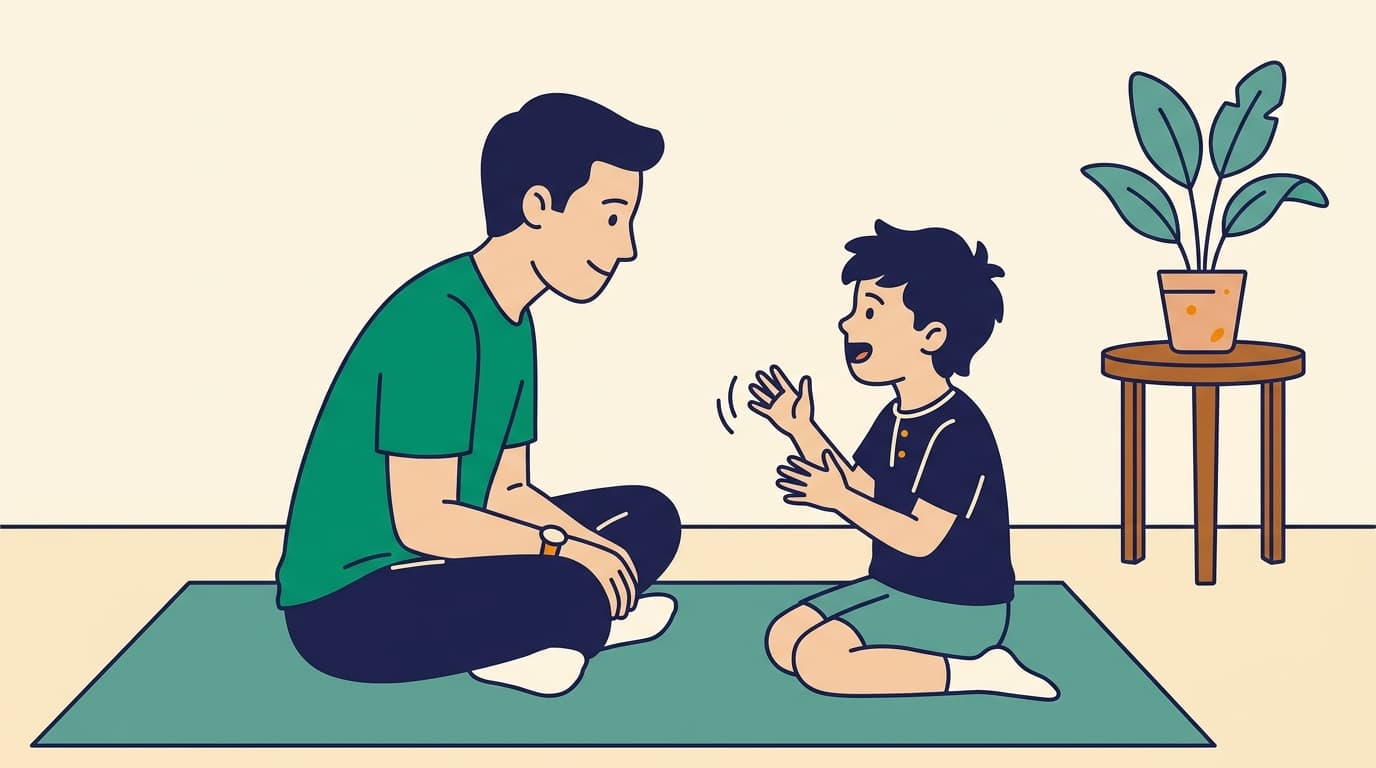
Every parent knows the feeling — you have two children raised in the same home with the same values, and they could not be more different. One thrives with structure; the other rebels against it. One processes emotions out loud; the other goes completely quiet. One needs constant connection; the other needs space to recharge alone. These are not random differences, and they are not failures of parenting. They are written clearly in your child's Moon sign — and, more broadly, in the 5th house of their birth chart.
In Vedic astrology, the Moon sign is arguably more important for children than the Sun sign — particularly in the first two decades of life. The Sun represents the soul's deeper purpose, the person your child is becoming over a lifetime. The Moon represents how they experience the world right now: their emotional needs, their instinctive responses, what makes them feel safe, and what triggers their anxiety or withdrawal.
Understanding your child's Moon sign does not mean treating astrology as a parenting manual. It means having a framework for seeing who your child actually is — rather than who you expected them to be or who you were at their age.
Why the Moon Sign Matters More Than the Sun Sign for Children
The Sun sign in Vedic astrology represents the soul's core identity — the fundamental nature that expresses more fully as a person matures. It takes years of life experience for the Sun's qualities to fully emerge.
The Moon, by contrast, is immediate. It governs the emotional body: how a child instinctively responds to the world before rational thought intervenes. The Moon sign is the child's default emotional setting — it is what you see when they are tired, scared, overwhelmed, or overjoyed. It governs their relationship with their mother and their first experience of safety and nurturance. It shapes their relationship with food, sleep, and physical comfort.
Practically speaking: if you want to understand why your 8-year-old responds the way they do — why they need what they need — the Moon is your starting point. The Sun will become more relevant as they enter their late teens and early adulthood.
For a foundation in how to read the Moon sign and other key chart placements, our complete guide to reading a Vedic birth chart covers the essentials. And to understand what the chart reveals about your child's professional potential and life path, a Child & Teen consultation provides a comprehensive reading tailored specifically to parents.
Moon Signs by Element: Understanding Your Child's Emotional Type
The twelve Moon sign placements fall into four elemental groups: Fire, Earth, Air, and Water. Understanding your child's element gives you immediate practical insight, even if you are new to astrology.
Fire Moon Children (Aries, Leo, Sagittarius)
Fire Moon children are emotionally driven by excitement, autonomy, and the freedom to express themselves. They light up when they feel seen and are quick to dim when they feel controlled, underestimated, or bored.
- Aries Moon: Intense, impulsive, and fast-cycling emotions. Gets frustrated quickly but recovers just as fast. Needs to feel like they have choices and agency. Power struggles with authority are common — give them real leadership opportunities rather than manufactured ones.
- Leo Moon: Needs recognition and genuine appreciation. Performs well with an audience and struggles with feeling ignored or ordinary. Cruelty (even unintentional) lands very hard. Warmth and specific praise ("I loved how you handled that") works far better than generic approval.
- Sagittarius Moon: Needs freedom, exploration, and meaning. Asks "why" constantly — not to be difficult but because they genuinely cannot engage with rules that have no logic. Responds well to the big picture ("here's why this matters") rather than just the instruction.
With Fire Moon children: avoid power struggles where possible. They need to feel like partners, not subjects. Give them real responsibility rather than pretend autonomy.
Earth Moon Children (Taurus, Virgo, Capricorn)
Earth Moon children are grounded in routine, sensory experience, and predictability. They process emotions more slowly than Fire or Air children and need time before they can articulate what they feel. Do not mistake this quietness for absence — the feelings are present and deep.
- Taurus Moon: The most comfort-seeking of all Moon signs. Food, physical touch, familiar environments, and consistent routines are emotional anchors. Changes to routine create more anxiety than they appear to. Extremely loyal and reliable once trust is established.
- Virgo Moon: Processes anxiety through analysis and detail. The child who asks hundreds of questions before a new experience is often a Virgo Moon managing uncertainty. They need information and preparation rather than "it'll be fine." Highly conscientious — be careful not to amplify their self-criticism.
- Capricorn Moon: Emotionally self-contained and often older than their years. These children carry a quality of seriousness that can look like they are handling everything fine — but they internalise more than they show. Create explicit permission to not be okay. Respond well to respect and being taken seriously.
Air Moon Children (Gemini, Libra, Aquarius)
Air Moon children process emotions through communication and mental frameworks. They need to talk about their feelings, understand them conceptually, and connect them to ideas. They tend to appear emotionally lighter than they actually are — but they are deeply affected by their social environment.
- Gemini Moon: Processes through talking, storytelling, and asking questions. Emotionally versatile but can seem scattered or changeable. Needs variety and mental stimulation; boredom is a genuine emotional stressor. Multiple interests are not unfocusedness — they are the Moon's nature.
- Libra Moon: Deeply affected by the emotional atmosphere around them. If the adults in their environment are stressed, a Libra Moon child feels it acutely and will try to restore balance — sometimes by suppressing their own feelings. Need explicit permission to have needs and preferences without worrying about others' comfort.
- Aquarius Moon: Independent, idealistic, and somewhat emotionally detached. These children often feel like they see the world differently from their peers — because they do. They need parents who respect their unusual perspectives without pathologizing them. Thrive with intellectual connection and shared ideas rather than pure emotional closeness.
Water Moon Children (Cancer, Scorpio, Pisces)
Water Moon children feel everything deeply and need emotional safety above all else. They are highly empathetic, often picking up on the emotions of everyone around them, which can be overwhelming without the right support.
- Cancer Moon: The most emotionally sensitive of all Moon signs, and the most deeply connected to home and mother. Needs a secure, consistent emotional environment. Even small disruptions to the home atmosphere can produce outsized emotional responses. Deeply nurturing when they feel safe; withdrawn when they do not.
- Scorpio Moon: Intense, perceptive, and private. These children sense when adults are not being authentic — they process this as a safety threat and become guarded. Radical honesty (age-appropriately delivered) builds trust far more effectively than managing what they hear. Emotions run deep and long.
- Pisces Moon: Highly imaginative, empathic to the point of absorbing others' emotions, and often dreamy. May struggle with the harshness of school environments or rigid structures. Needs creative outlets, quiet time, and clear boundaries between their emotions and others' emotions — a skill that takes time to develop.
Beyond the Moon Sign: The 5th House and a Child's Destiny
The Moon sign is the day-to-day emotional weather of your child. But in Vedic astrology, the 5th house — known as Putra Bhava, the "house of children" — is the deeper structural reading of who this child is and what they have come into this life to express. Where the Moon is today, the 5th house is tomorrow.
Unlock Your Insight
Curious how this affects your chart?
Get personalized guidance from Meganathan with a one-on-one Vedic astrology consultation.
Book a ConsultationThe 5th house governs three interconnected domains in a child's life:
- Innate intelligence and learning capacity: A well-placed 5th lord and benefic planets in the 5th house correlate with strong learning aptitude, creative intelligence, and ease with structured knowledge. The 5th house is where school performance, examination success, and intellectual curiosity are read.
- Creative talents and natural interests: The 5th house reveals which domains the child is naturally drawn to — arts, sports, sciences, leadership, or service. These are not hobbies to be imposed but signals to be noticed.
- Purva Punya — the karmic inheritance: The 5th house is classically read as the storehouse of merit from past lives. A strong 5th house suggests a child who arrives with good fortune, supportive circumstances, and a sense of ease — what traditional texts describe as "blessings from the ancestors."
When the 5th house is under stress — afflicted by malefic planets, a weak 5th lord, or difficult aspects — Vedic astrology speaks of Putra Dosha (afflictions in the children domain) or Pithru Dosha (inherited patterns from paternal lineage). These are not pronouncements of doom; they are flags that parent-child patterns in this family may need conscious navigation. In our practice, we've seen that simply naming these patterns — making visible what has been operating invisibly — is often what shifts them.
Reading a child's chart without the 5th house is like reading a novel's first chapter and skipping the plot summary. The Moon tells you how they feel this week; the 5th house tells you what they are here to do.
Practical Parenting by Moon Sign: When to Push, When to Support
One of the most useful applications of Moon sign knowledge is understanding when to push your child toward growth and when to simply provide support. This distinction — which requires reading the individual child's capacity — is something the Moon sign clarifies.
When to push (gently): Fire and Air Moon children often need external encouragement to develop follow-through and emotional depth. They run toward excitement but can avoid difficulty. A well-timed challenge, delivered with warmth, helps them build capacity they otherwise skip.
When to support without pushing: Earth and Water Moon children typically do not need more pressure — they generate enough internally. What they need is a secure environment in which to take risks at their own pace. Pushing harder usually creates contraction, not growth.
In our practice, many parents come to a Child & Teen consultation expecting to hear about their child's "potential" in career and achievement. What often surprises them is how much the Moon sign reading clarifies present-day parenting challenges — the specific friction points between parent and child that suddenly make complete sense once the chart is in view.
How a Child's Chart Reading Can Help
A comprehensive Child & Teen consultation goes well beyond the Moon sign. It maps the full chart to identify:
- Natural talents and domains of strength — which areas of life and which career paths align with the chart's planetary strengths
- 5th house intelligence profile — the child's learning style, examination potential, and the subjects most likely to engage them deeply
- Learning style indicators — Mercury's placement reveals how a child processes information and where they may need additional support
- Emotional challenges to watch for — particularly during challenging Dasha periods or when difficult transits activate sensitive chart points
- Timing for key developmental windows — when specific abilities, interests, or challenges are likely to emerge based on Dasha analysis
- Parent-child compatibility — how the parent's chart interacts with the child's, which can explain persistent friction or effortless connection
- Putra Dosha and karmic patterns — when family patterns have a karmic signature that can be named, understood, and consciously navigated
The goal of a child's chart reading is not to limit what a child can become — it is to give parents a map of who this particular child actually is, so that support can be tailored to reality rather than expectation.
For more on how Vedic astrology applies to key life phases and decisions, see our overview of what makes Vedic astrology different from Western — particularly the section on the Dasha timing system, which reveals your child's major life chapters in advance.
Frequently Asked Questions
Why is the Moon sign more important than the Sun sign for children in Vedic astrology?
The Moon governs the emotional body, instinctive responses, and the experience of safety and nurturance — all of which are dominant in childhood. The Sun represents core identity that emerges more fully in adulthood. For understanding a child's day-to-day emotional needs, learning style, and temperament, the Moon sign is the primary lens. The Sun becomes increasingly important as the child matures into young adulthood.
How do I find my child's Vedic Moon sign?
You need your child's birth date, exact time, and place. Enter these into any Vedic (sidereal) astrology calculator to get the Moon sign. Important: Vedic Moon signs (calculated in the sidereal zodiac) differ from Western Moon signs (calculated in the tropical zodiac) by roughly one sign — for example, a child who is a Cancer Moon in a Western app is often a Gemini Moon in the Vedic system. Always use a calculator that specifies "Vedic" or "sidereal" to get the right placement.
What is the 5th house in Vedic astrology and why does it matter for children?
The 5th house, called Putra Bhava ("house of children"), governs innate intelligence, learning capacity, creative talents, and the karmic merit a child arrives with. It is the deeper structural reading of who the child is and what they have come into this life to express. While the Moon sign describes how a child experiences the world day to day, the 5th house describes their inherent aptitudes and life themes. Both are essential for a complete reading.
Can a child's birth chart predict what career they will have?
The chart reveals natural aptitudes, domains of strength, and timing for professional development — not a fixed career outcome. A child with a strong Mercury in the 10th house has natural capacity for communication, analysis, and intellectual work. A child with Mars prominently connected to career houses has drive and competitive energy suited to leadership or physical fields. These are tendencies, not destinies — the chart describes potential that the child chooses how to develop.
What if my child's Moon sign and mine seem incompatible?
Moon sign friction between parent and child is real and common — a Fire Moon parent and a Water Moon child, for example, can genuinely struggle to understand each other's emotional pace. Knowing this is freeing rather than limiting: it removes blame and replaces it with understanding. A child consultation that includes parent-child chart comparison can identify the specific points of friction and suggest practical communication adjustments that work with, rather than against, each person's nature.
The Key Is Waiting
Your Divine Secret Is Ready to Be Unlocked
The answers you’ve been searching for already exist within your birth chart. You’ve felt the yearning. Now it’s time to turn the key.
Book Your Consultation